
HDMI
This document details the identification, connection methods, system configuration, and troubleshooting for the HDMI display interface on the Quectel Pi H1 single-board computer, using an 10.1-inch HDMI display as an example.
HDMI display connection
Follow the diagram below for connection:
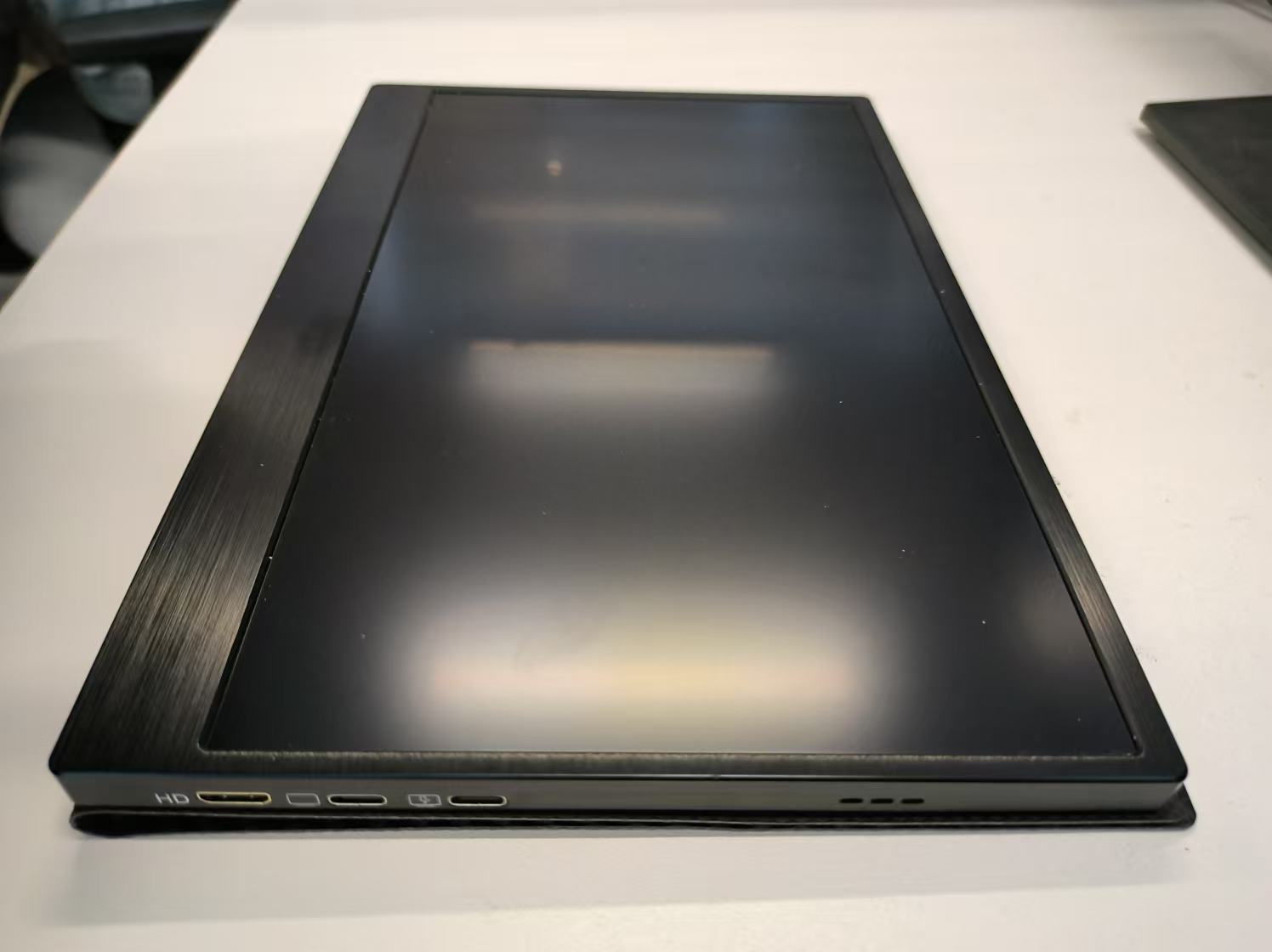
10.1-inch HDMI Display
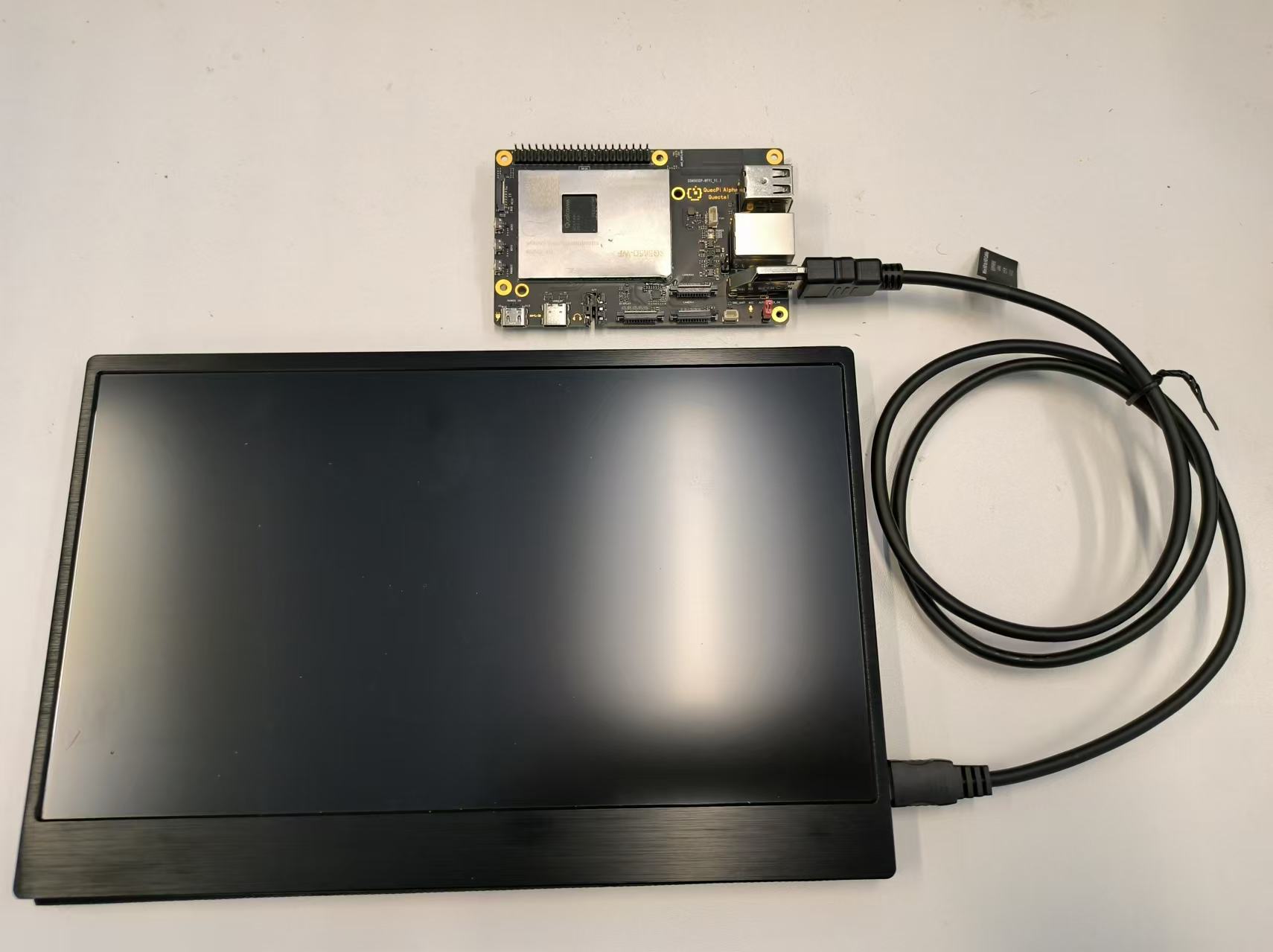
HDMI display connection setup
For specific login operations, please refer to System login
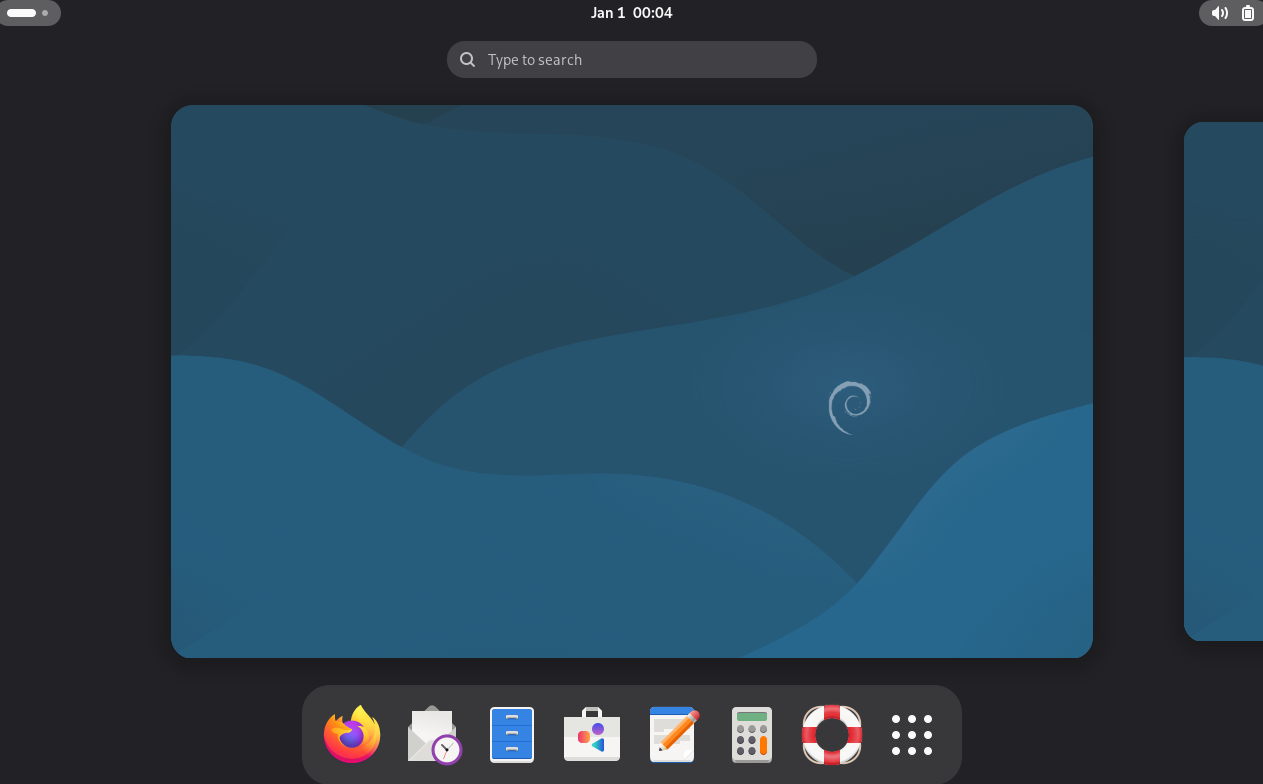
Display Interface
Function usage
Adjust display brightness and volume
Note: After connecting a HDMI display, the resolution is adaptive and cannot be changed. Currently supported HDMI resolutions are 3840 × 2160, 1920 × 1080, 1280 × 720, 720 × 480
After connecting the HDMI display and powering on, enter the Gnome desktop, click the battery icon in the upper right corner, and slide the volume bar and brightness bar to adjust volume and brightness.
The following is the operation diagram for adjusting display brightness and volume:
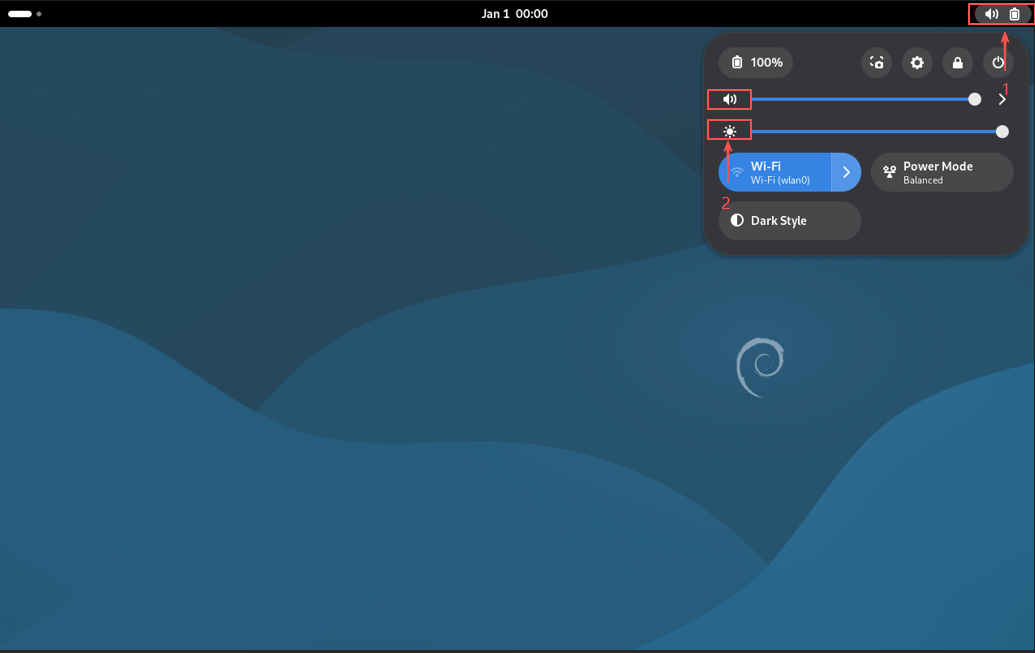
Brightness and volume adjustment
Touch function usage
After connecting the Micro HDMI display and powering on, you need to connect the USB port to the Micro HDMI display.
Note: This function requires a Micro HDMI display with touch functionality.
Follow the diagram below for connection:
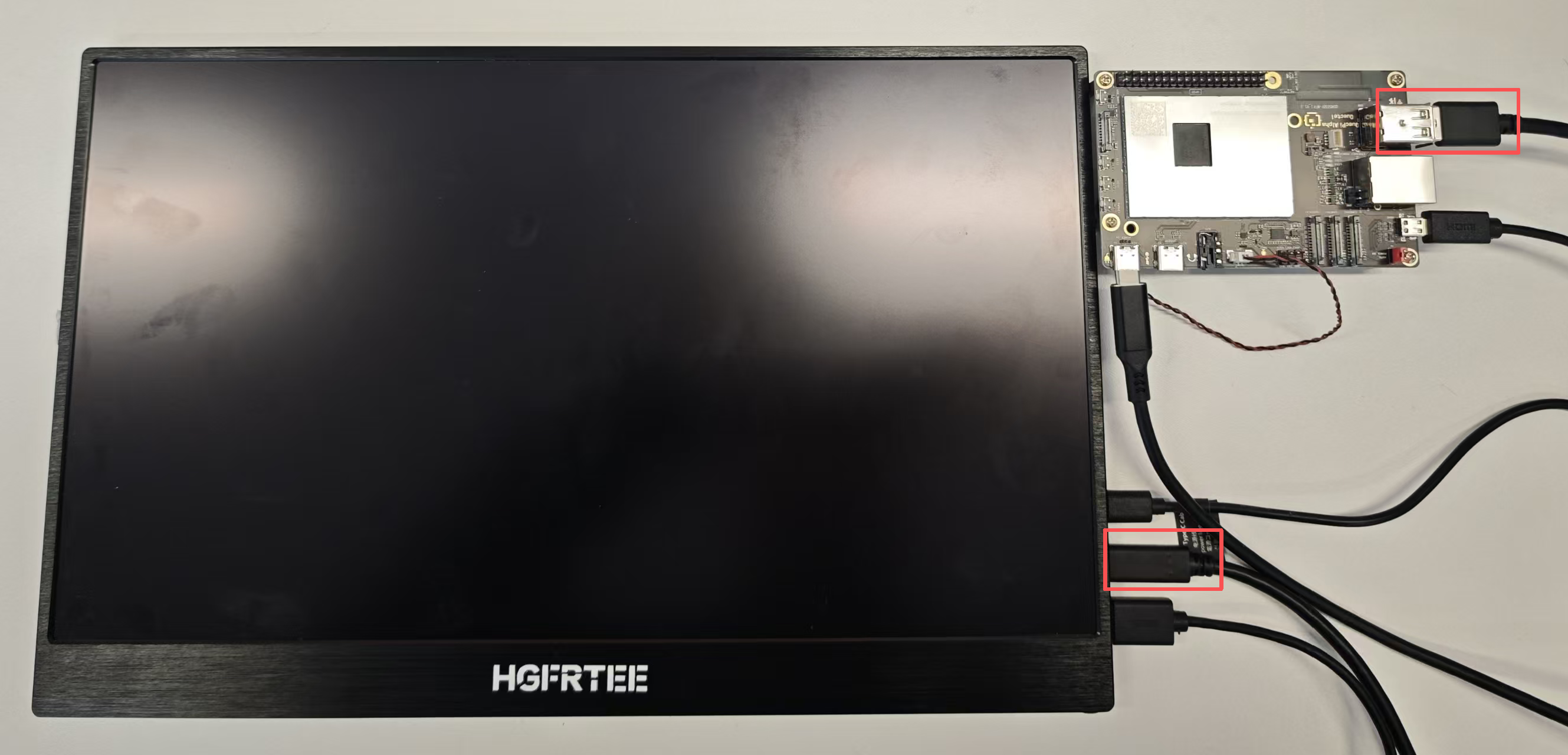
Touch Function Connection
Video playback function usage
GUI video playback: Open the Gnome desktop, find the video file in the Gnome desktop's File Manager, and click the video file to play it.
Note: Double-click the frame to play the video in fullscreen.
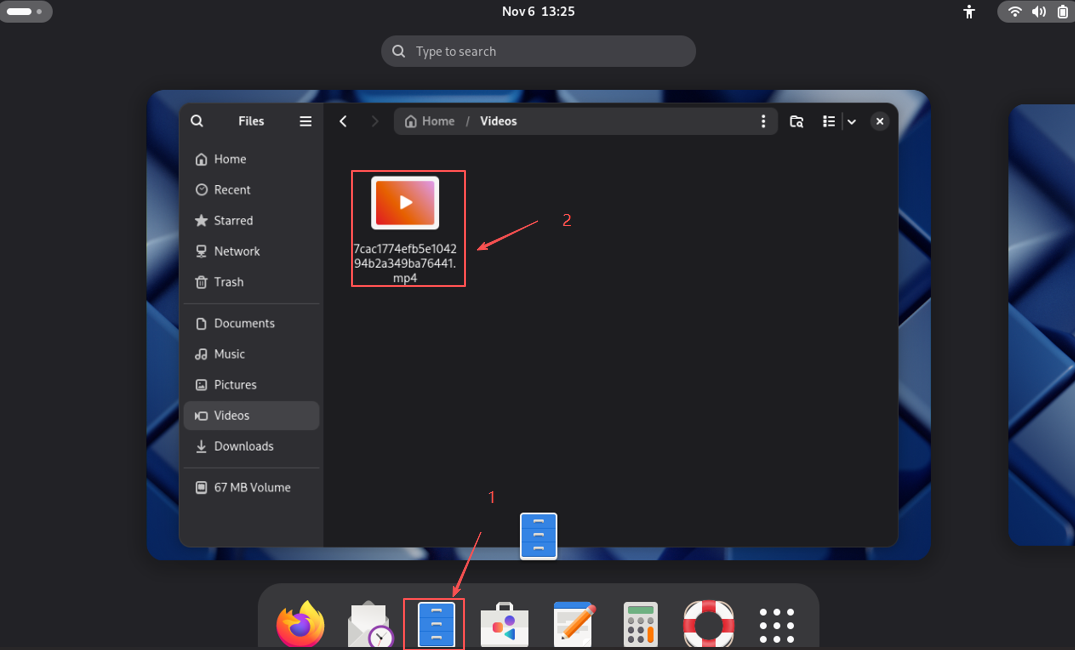
Desktop Operation Steps
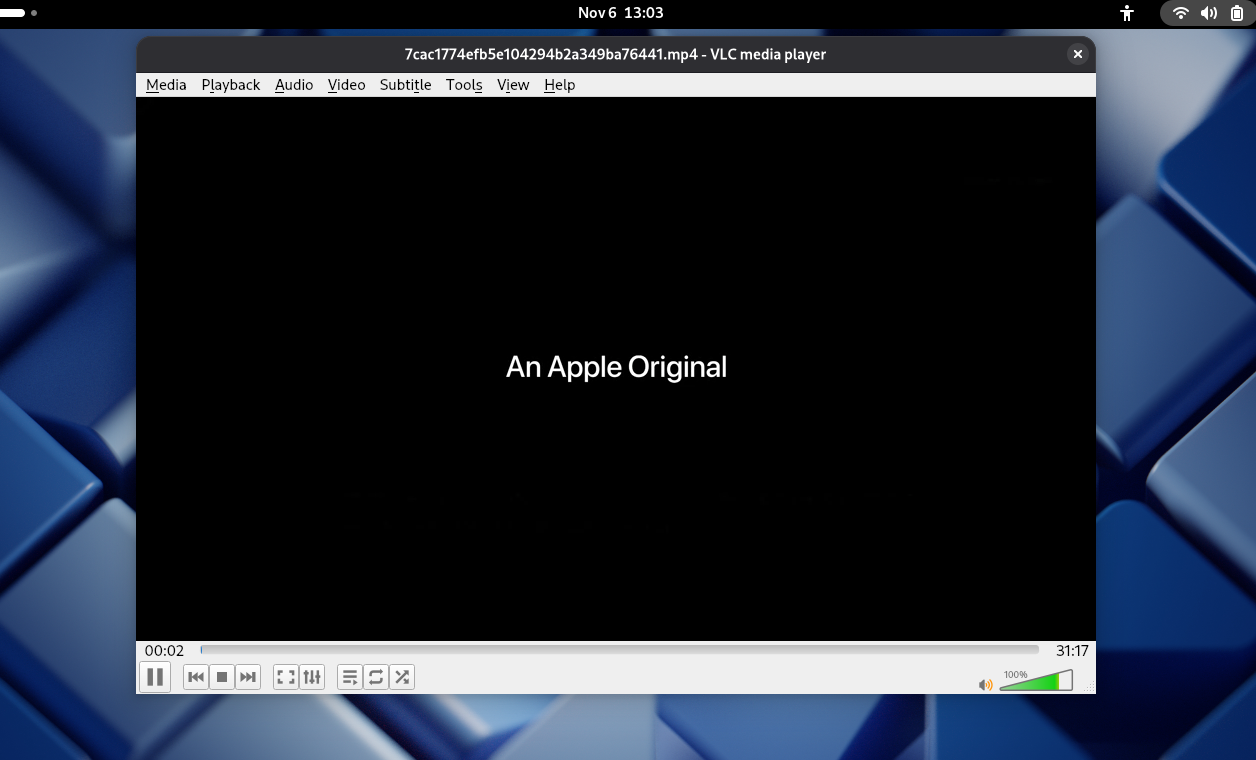
Video Playback Interface
VLC command-line video playback: When playing via command line, follow these steps to enter the corresponding commands.
export LIBGL_ALWAYS_SOFTWARE=1 #Modify the environment variable of this window to switch to CPU rendering during video playback
VLC test.mp4                   #Play video
The following is the video playback interface diagram:
Video Playback Interface
GST command-line video playback function: When playing via command line, you need to enter the following corresponding command.
gst-launch-1.0 filesrc location=/home/pi/test.mp4 ! qtdemux ! h264parse ! avdec_h264 ! autovideosink ## The parameter after "location" should be modified according to the actual video file path
Command parameter description:
gst-launch-1.0: This is GStreamer's command-line tool for building and running a GStreamer pipeline.filesrc location=/home/pi/test.mp4: Uses thefilesrcelement to read video files from the specified path/home/pi/test.mp4.! qtdemux: Through the!symbol, connects the output of the previous element to the input of the next element.qtdemuxis responsible for demultiplexing the MP4 container format, separating the audio and video streams within it.! h264parse: Parses the separated H.264 video stream, reorganizing it into a format suitable for decoder processing.! avdec_h264: Uses the software decoderavdec_h264to decode the H.264 video stream. This is a GStreamer plugin element based on FFmpeg.! autovideosink: Automatically selects an appropriate video output component to display video content. Depending on the system environment, it selects the most suitable sink (e.g.,waylandsinkfor Wayland,ximagesinkfor X11, etc.).
The following is the video playback interface diagram:
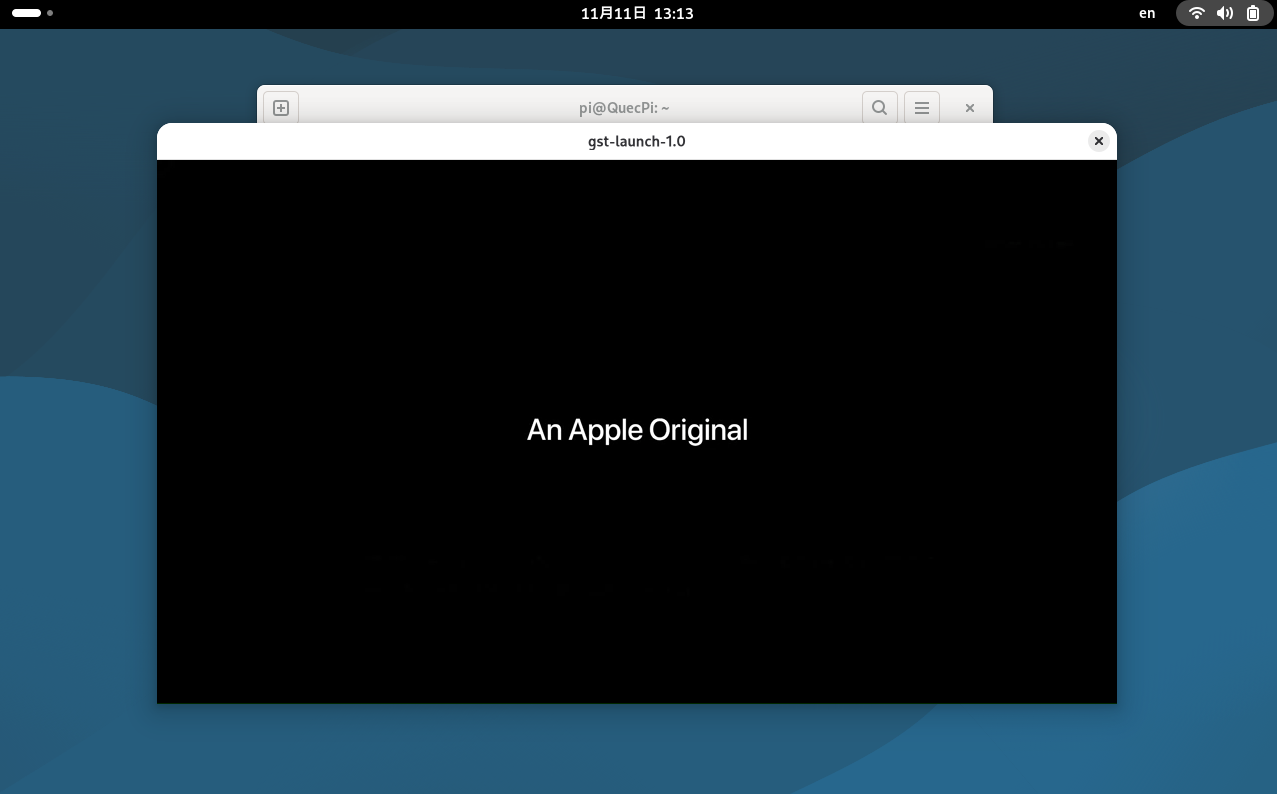
Video playback interface
Audio playback function usage
GUI audio playback: Open the Gnome desktop, find the audio file in the Gnome desktop's File Manager, and click the audio file to play it.
Note: To play audio, connect speakers to the Quectel-Pi-H1 single-board computer.
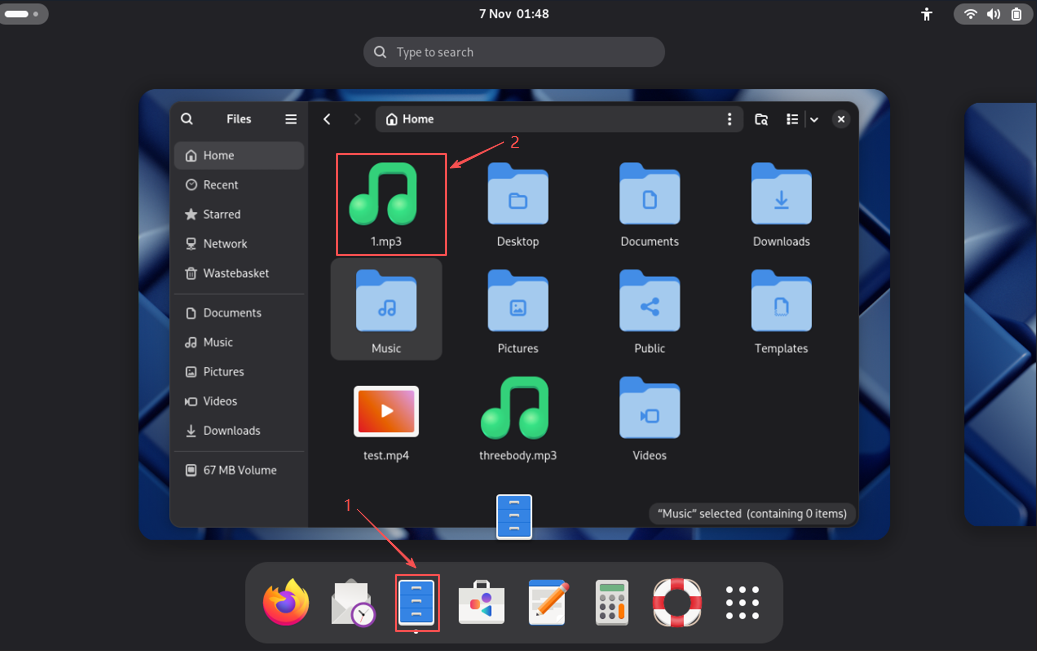
Desktop Operation Steps
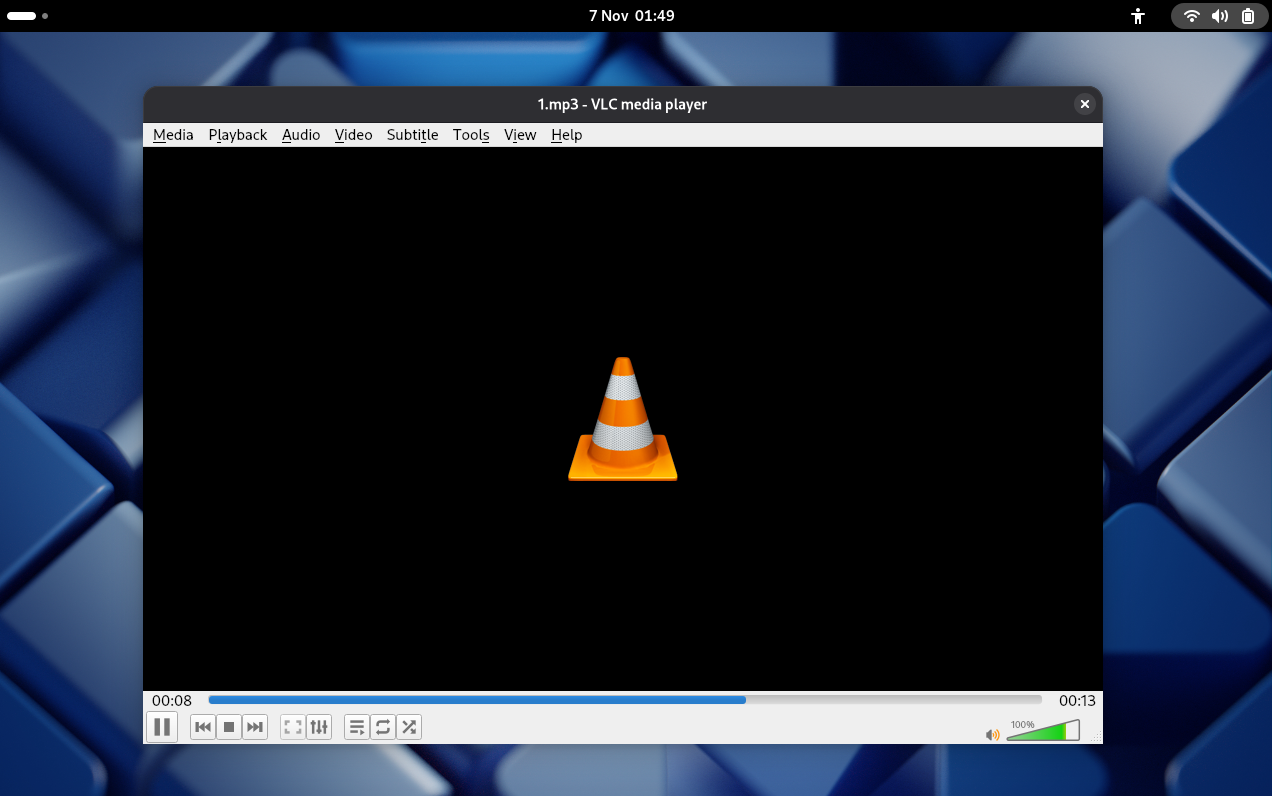
Audio Playback Interface
VLC command-line audio playback function: When playing via command line, follow these steps to enter the corresponding commands.
export LIBGL_ALWAYS_SOFTWARE=1 #Modify the environment variable of this window to switch to CPU rendering during audio playback
VLC 1.mp3                      #Play audio
The following is the audio playback interface diagram:
Audio Playback Interface
GST command-line audio playback function: When playing via command line, you need to follow the steps below to enter the corresponding commands.
Note: After entering the corresponding command, the audio playback progress will be displayed in the terminal.
gst-launch-1.0 uridecodebin uri=file:///home/pi/test.mp3 ! audioconvert ! audioresample ! autoaudiosink ## The parameter after "uri" should be modified according to the actual video file path
Command parameter description:
gst-launch-1.0: This is GStreamer's command-line tool for building and running a GStreamer pipeline.uridecodebin uri=file:///home/pi/test.mp3: Uses theuridecodebinelement to read and automatically decode audio files from the specified URI pathfile:///home/pi/test.mp3. This is an advanced element that can automatically detect media types and select appropriate demuxers and decoders.! audioconvert: Through the!symbol, connects the output of the previous element to the input of the next element.audioconvertis used to convert audio formats, ensuring audio format compatibility between adjacent elements.! audioresample: Resamples the audio, adjusting the audio sample rate to match the requirements of subsequent elements.! autoaudiosink: Automatically selects an appropriate audio output component to play audio content. Depending on the system environment, it selects the most suitable audio output device, such as ALSA, PulseAudio, or other available audio backends.
The following is the audio playback interface diagram:
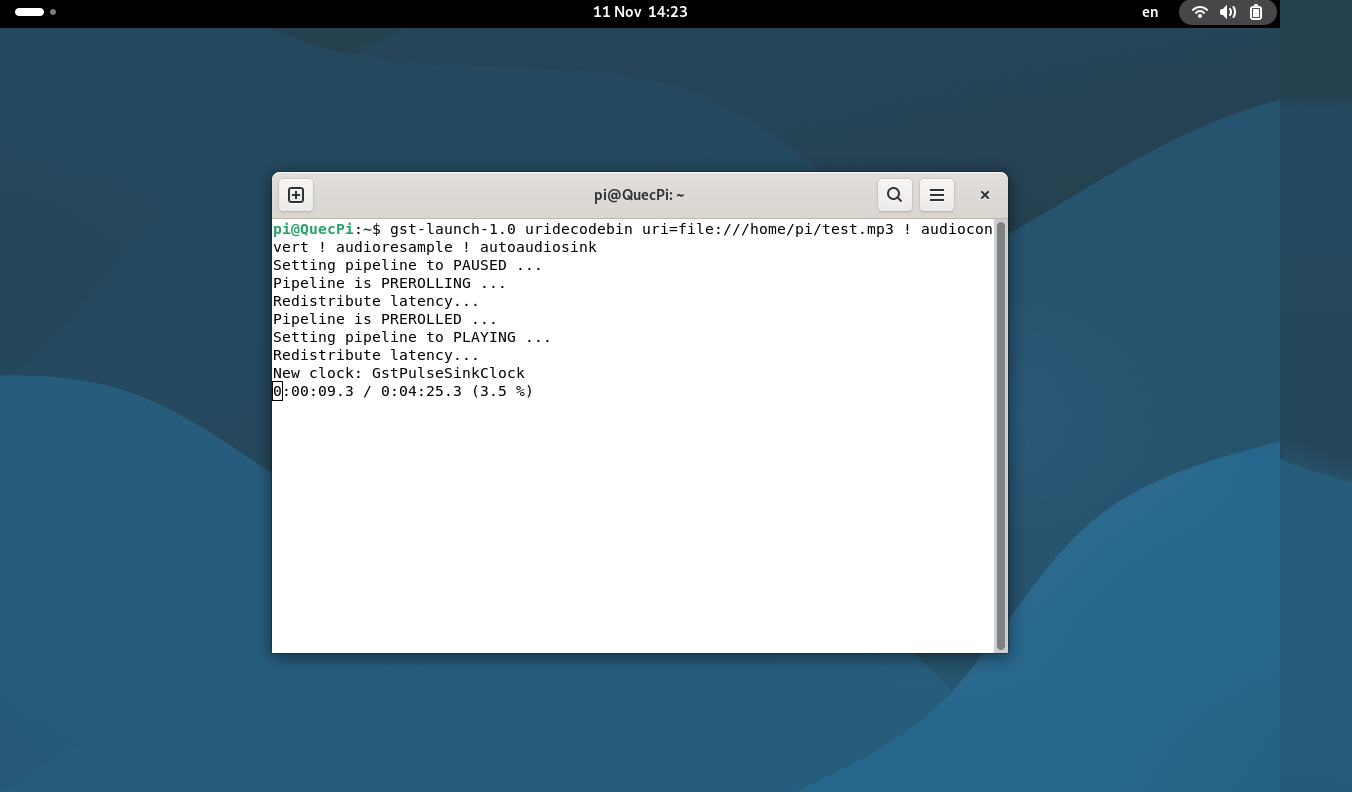
Audio playback interface
Advanced functions
HDMI display hot plugging
The HDMI display supports hot plugging functionality, allowing you to plug and unplug the HDMI display while the system is running, and the system will automatically recognize and display the image.
Hot plugging usage
- While the system is running, directly insert the HDMI display into the single-board computer's Micro HDMI port.
- The system will automatically detect the HDMI device and start display output.
- To disconnect the HDMI display, simply unplug the Micro HDMI cable, and the system will automatically switch display output.
Hot plugging precautions
- Hot plugging functionality only supports an display connected via the Micro HDMI port.
- A display connected via a DP to HDMI adapter may not properly support hot plugging.
- Avoid frequent operations during hot-plugging; it is recommended to wait at least 5 seconds between each plug/unplug operation.
Application scenarios
- Media entertainment terminal: The Quectel Pi H1 single-board computer can serve as a media entertainment terminal for playing videos, music, and viewing photos.
- Industrial data visualization platform: The Quectel Pi H1 single-board computer can serve as an industrial data visualization platform to display industrial data, monitor device status, and process data.
- Smart interactive terminal: The Quectel Pi H1 single-board computer can serve as a smart interactive terminal for various human-machine interaction applications.
Troubleshooting
How to view system logs
To view system logs, you need to connect the serial cable to a computer and use a serial debugging tool to view the logs.
Black screen issue
After properly connecting the device, if the display shows a black screen after powering on, it may be due to the following situations:
- Power connection issue
Check if the display's power supply interface is properly connected. Confirm that power supply is correctly connected and supplying power. - Connection issue
Check if the Micro HDMI cable is properly connected and securely inserted. Confirm the Micro HDMI cable direction is correct to avoid reverse insertion. Check the connector for physical damage. - System startup issue
Confirm the system has started properly and loaded the display service. View system logs to confirm the display driver is loaded properly. - Resolution compatibility issue
Check if the resolution supported by the display matches the system output resolution. Manually adjust the resolution settings if necessary.
Screen artifact issue
After properly connecting the device, if the display shows screen artifact after powering on, it may be due to the following situations:
- Signal interference
Check if the Micro HDMI cable is too long or of poor quality. Confirm whether there are strong electromagnetic interference sources around the cable. Try replacing it with a high-quality Micro HDMI cable. - Hardware compatibility issue
Confirm the display model used is fully compatible with Quectel Pi H1. Check if the display firmware version is up to date. - Poor interface contact
Check the Micro HDMI interface for looseness or oxidation. Unplug and replug the Micro HDMI cable to ensure a firm connection.