
MIPI
This document details the usage of the MIPI-DSI display on the Quectel Pi M1 smart single-board computer, using the Waveshare 8-inch DSI interface IPS capacitive touchscreen as an example.
MIPI display connection
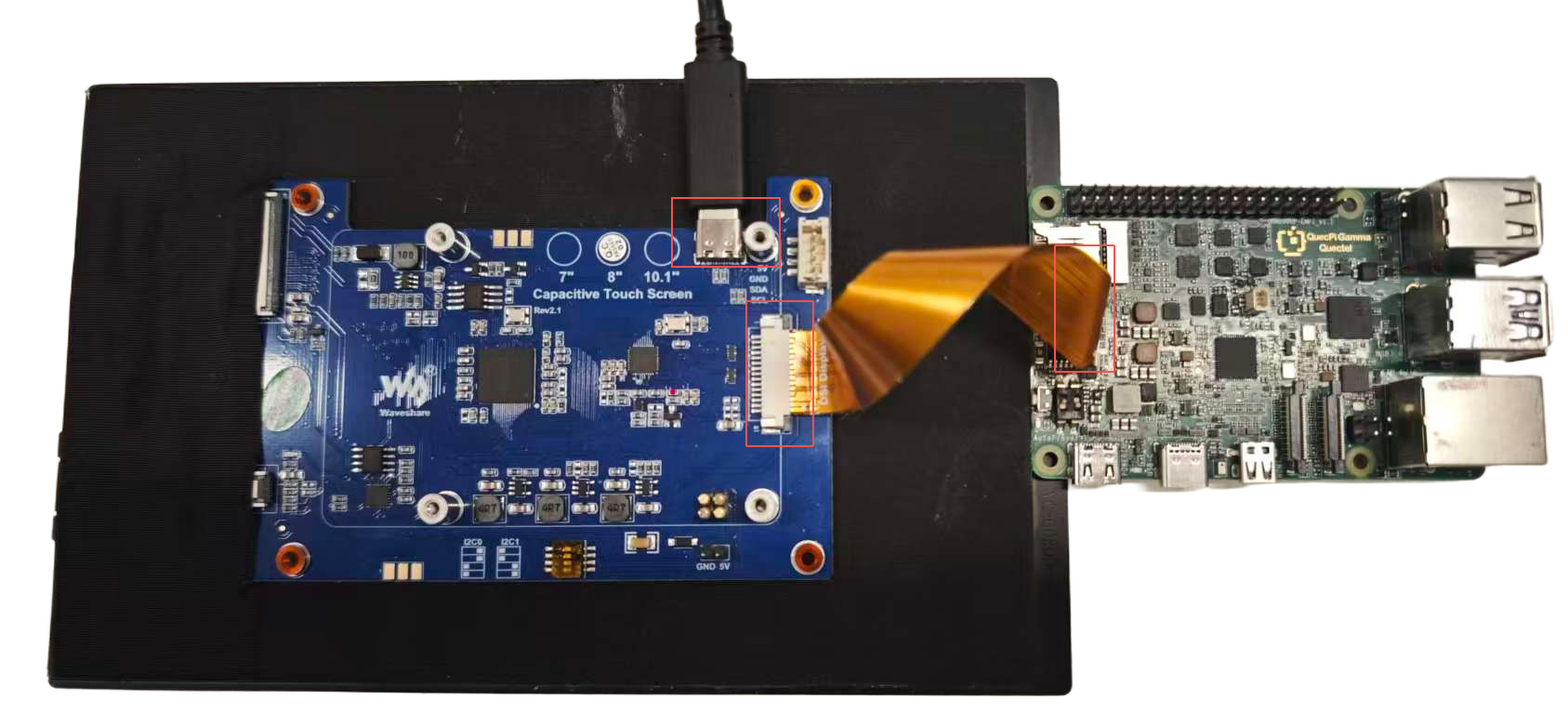
Hardware interface connection
The screen has 4 power supply interfaces, and you can choose any one. In this example, power is supplied through point "1".
- Type-C interface.
- I2C communication and power supply interface.
- 5V input/output interface.
- I2C communication and power supply interface. Align the screw hole with the Quectel Pi M1 smart single-board computer and tighten the screw to ensure good contact between the pogo pin and the 40-pin connector.
Boot startup
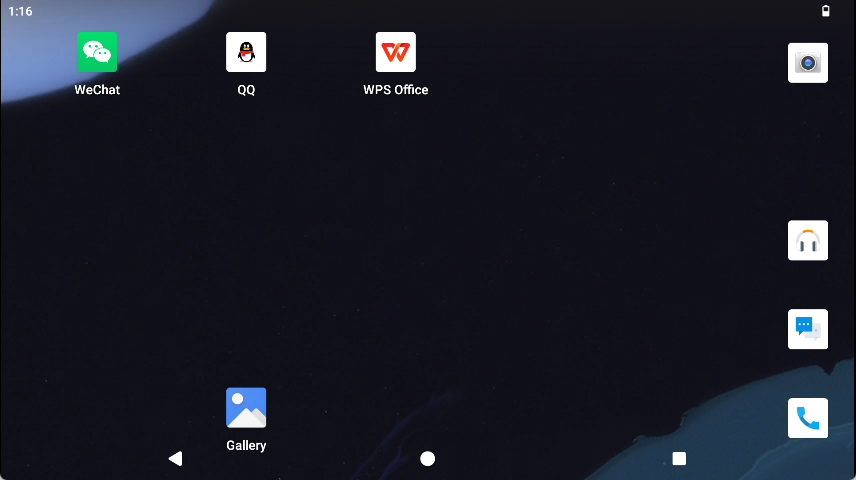
After powering on and booting up, enter the system desktop.
Function usage
Touch function usage
After connecting the MIPI display and powering on, you can directly use the touch function.
Adjust audio and display
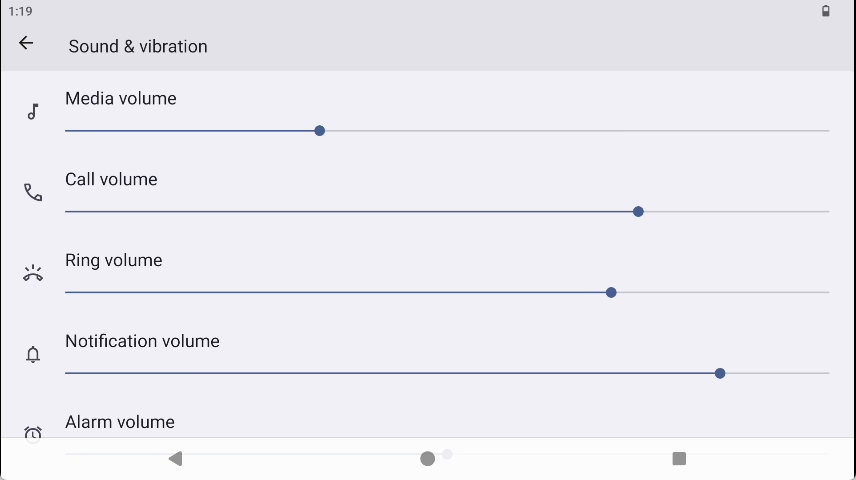
For specific audio configuration, please navigate sequentially to: Android Desktop → Menu → Settings → Sound & Vibration to configure audio settings.
For specific display configuration, please navigate sequentially to: Android Desktop → Menu → Settings → Display to configure display settings.
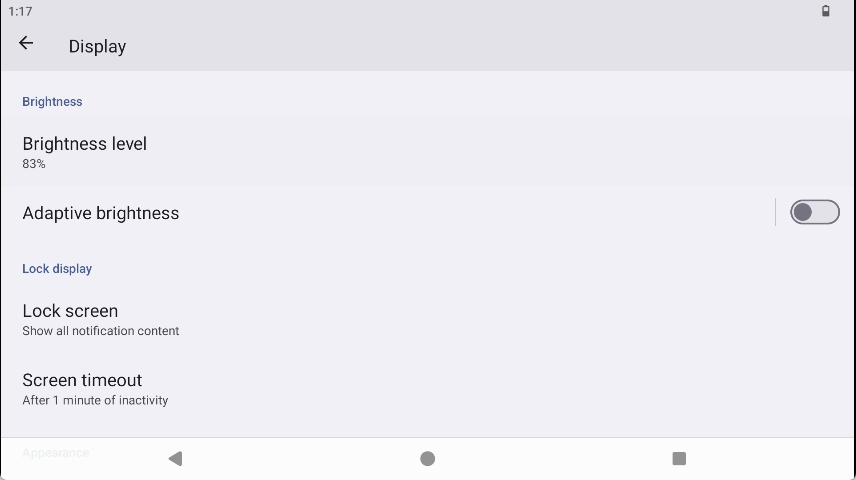
Note: Only display and sound operation images are shown here. Operations for battery, storage, wallpaper, location information, etc., follow the same steps as display and sound operations.
Video playback function
Video playback function on Android desktop
Use the adb tool to push video files to the smart single-board computer. For adb usage, please refer to the adb usage introduction in the Getting Started section.
adb push "E:\FeiShu\Animal World.mp4" /sdcard/DCIM     #Push relevant videos to the DCIM directory of the smart single-board computer's SD card

#Enter the smart single-board computer
su    #Switch to root user
am broadcast -a android.intent.action.MEDIA_SCANNER_SCAN_FILE -d file:///sdcard/DCIM/Animal World.mp4    #Rescan this file in the media library
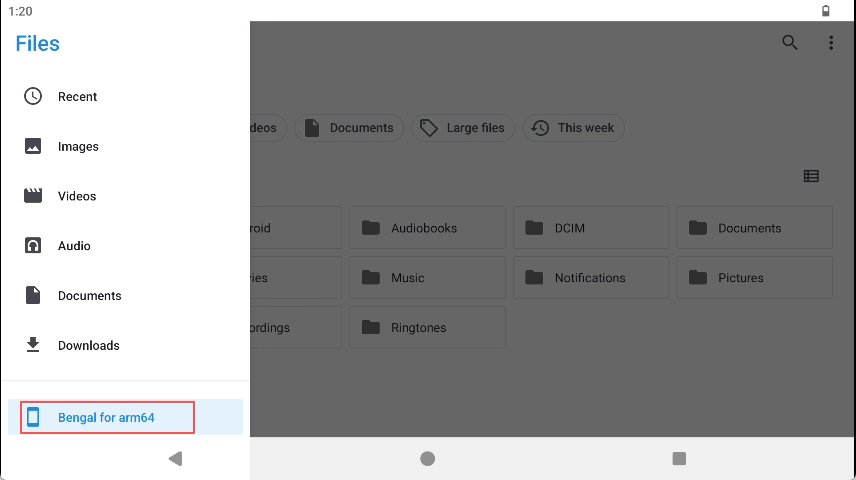
For specific configuration, please navigate sequentially to:
**Android** Desktop → File Manager → Video Files → Play Video.
Audio playback function
Audio playback function on Android desktop:
Note: To play audio, you need to connect speakers to the Quectel Pi M1 smart single-board computer.
- Use the adb tool to push audio files to the smart single-board computer. For adb usage, please refer to the adb usage introduction in the Getting Started section.
adb push E:\eage\test.mp3 /sdcard/Music #Push audio to the Music directory of the smart single-board computer's SD card

#Enter the smart single-board computer
su    #Switch to root user
am broadcast -a android.intent.action.MEDIA_SCANNER_SCAN_FILE -d file:///sdcard/Music/test.mp3     #Rescan this file in the media library
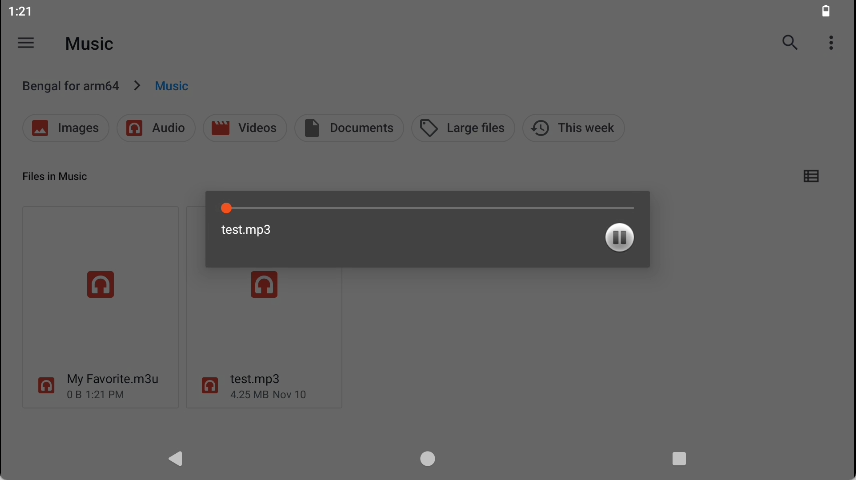
For specific configuration, please navigate sequentially to:
**Android** Desktop → File Manager → Play Audio.
Application scenarios
- Media Entertainment Terminal: Using the Quectel Pi M1 smart single-board computer as a media entertainment terminal, it can play video and audio content, view pictures, etc.
- Industrial Data Visualization Platform: Using the Quectel Pi M1 smart single-board computer as an industrial data visualization platform, it can display industrial data, monitor equipment operation status, and perform data processing.
- Smart Interactive Terminal: Using the Quectel Pi M1 smart single-board computer as a smart interactive terminal, it can be used for various human-machine interaction applications.
Troubleshooting
How to view system logs
To view system logs, connect the serial cable to the computer and use a serial tool to view the logs.
Black screen issue
After properly connecting the device and powering it on, if the display shows a black screen, it could be due to the following situations:
- Power connection issue:
Check if the display's power supply interface is properly connected. Confirm that at least one of the four power supply interfaces is correctly connected, ensure the power screw is tightened, and the pogo pin makes good contact with the 40-pin interface.
- Connection issue:
Check if the MIPI cable is properly inserted and firmly connected. Confirm the cable direction is correct to avoid reverse insertion. Check if the connector has physical damage.
- System boot issue:
Confirm that the system has booted normally and loaded the display service. Check system logs to confirm whether the display driver is loaded properly.
Screen artifact issue
After properly connecting the device and powering it on, if the display shows a screen artifact, it could be due to the following situations:
- Signal interference:
Check if the MIPI cable is too long or of poor quality. Confirm there are no strong electromagnetic interference sources around the cable. Try replacing with a high-quality MIPI cable.
- Hardware compatibility issue:
Confirm that the display model used is fully compatible with the Quectel Pi M1. Check if the display firmware version is the latest version.
Touch function abnormality
If the touch function is abnormal, it could be due to the following situation:
- Driver issue:
Confirm that the system has correctly loaded the touchscreen driver. Check if the I2C communication is established properly.